

So that every ride in LaceUp events is scored fairly, we have developed an algorithm together with our colleagues at ETH Zurich that automatically rates the quality of each individual activity.
How does the quality-score system work?
Every submitted ride receives a quality score based on various metrics – such as GPS stability, sampling rate, signal noise and speed fluctuations.
If this score falls below a defined threshold, the activity is automatically removed from the leaderboard, and the participant is transparently informed why that happened.
To classify potential problems clearly and traceably, we introduced three categories of indicators: Notes, Flags and Warnings. They appear individually or combined, feed an internal quality value, and ensure transparency and fairness in the review process.
👋 NOTE
A Note marks minor inconsistencies that have no effect on timing, or occur so frequently that they are statistically insignificant – provided the rest of the data is clean.
They serve reviewers as orientation but do not require manual checking.
Example: an elevation profile slightly shifted due to imprecise barometer calibration.
⚠️ FLAG
A Flag points to problems that could affect the reliability of the timing and require critical review.
Several flags usually mean the ride is not admitted to the leaderboard.
Example: extremely high speeds that would only be realistic for professionals.
⛔️ WARNING
A Warning is the highest alert level, issued when the integrity of the file is in question or the behaviour appears physically impossible.
Rides with a warning are rejected, and the participant can ride the route again.
Examples: impossibly high accelerations or average speeds, or a position frequency that is too low (more than one second per data point).
Why this matters
Our goal is that every rider can understand how we ensure fairness and transparency – while minimising false positives.
Over 99% of all rides pass our quality check without restrictions. Only a small fraction is flagged or excluded – traceably, data-driven and fairly.
If you are interested in the technical details behind our digital-doping detection and fair ranking algorithms, stay tuned: the coming posts will go even deeper.
Insights from our data analysis
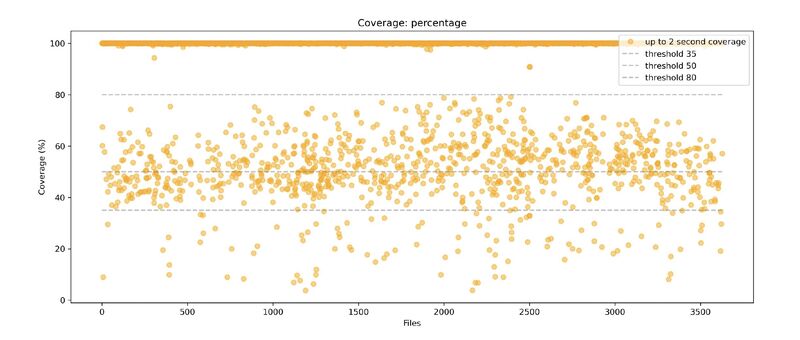
Position frequencies of different devices
An overview of how often different GPS devices record position data – showing the diversity of data our algorithm works with.
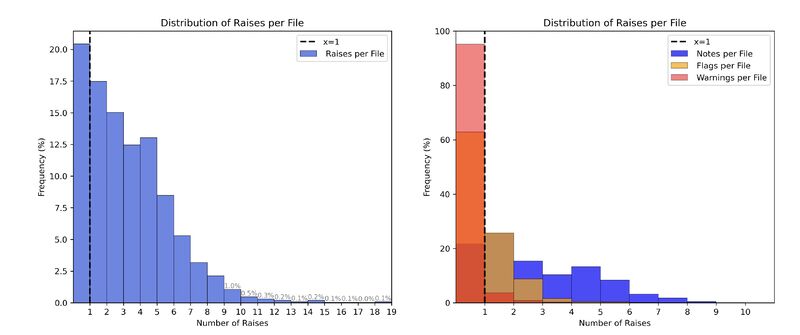
Event statistics: Notes, Flags and Warnings at a glance
A preview of our quality-check results: how many notes, flags and warnings occur in a typical LaceUp event – over 99% of rides make it into the ranking.
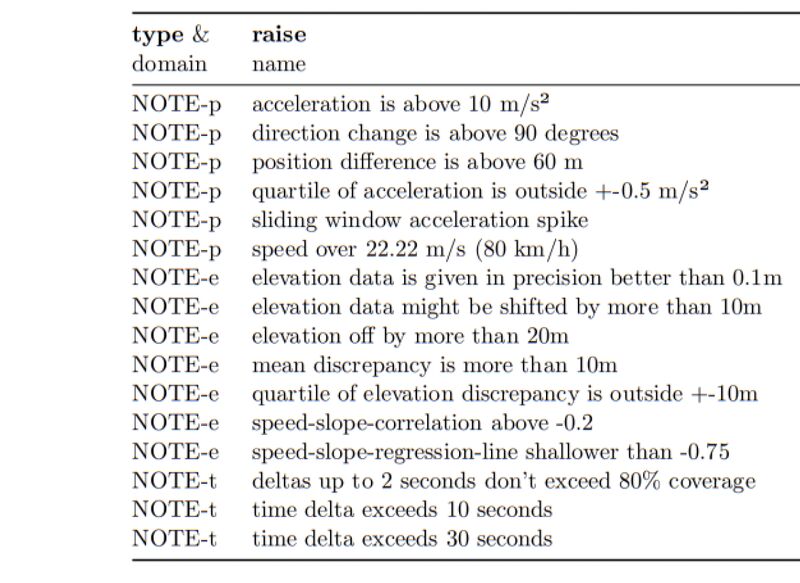
Variables for Notes (preview)
A look at the factors we consider for notes. The exact variables for Flags and Warnings remain confidential to protect the integrity of our checks.
Conclusion
Fairness in digital sport does not come from blind algorithms, but from transparent criteria and understandable communication.
With our approach, every performance counts – honestly, traceably and with technical precision.
Credits
Kevin Kosch Nikolaus Rath Benedikt Soja, Matthias Aichinger-Rosenberger, Nico Schefer, Sebastian de Castelberg, Tobias W.