

Our current analysis – a collaboration between LaceUp, ETH Zurich and students Kevin Kosch and Nikolaus Rath – examines the phenomenon of digital doping: manipulating GPS tracks to gain an advantage or to probe data quality.
First findings from the lab:
- Splicing tracks together is easy to do and hard to detect – especially in tunnels or narrow valleys.
- Artificial speed boosts can be generated, but are usually easy to uncover.
- Reversed routes stand out clearly through the correlation of speed and gradient.
- Manipulation algorithms are getting ever more sophisticated – yet a single small mistake can expose the entire fake.
- The biggest challenge lies in GNSS accuracy: it varies widely between devices and pre-processing methods, which makes separating measurement error from fraud difficult.
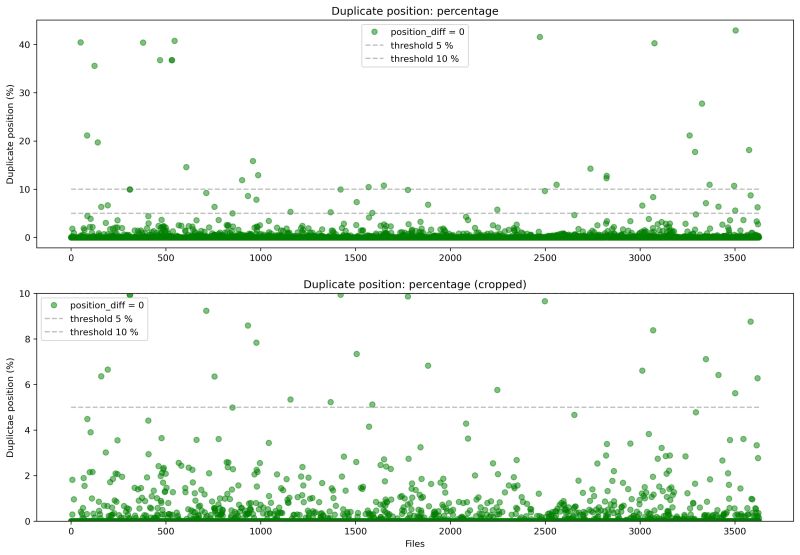
In the next posts we will show you how our algorithm automatically assesses the quality of GPX files. The chart below shows the data distribution of 3,628 anonymised GPX files – focusing on duplicate position data, which really should not occur.
The figure shows the data distribution of 3,628 anonymised GPX files with a focus on duplicate positions – something that should not occur.
Credits
Kevin Kosch Nikolaus Rath Benedikt Soja, Matthias Aichinger-Rosenberger, Nico Schefer, Sebastian de Castelberg, Tobias W.