

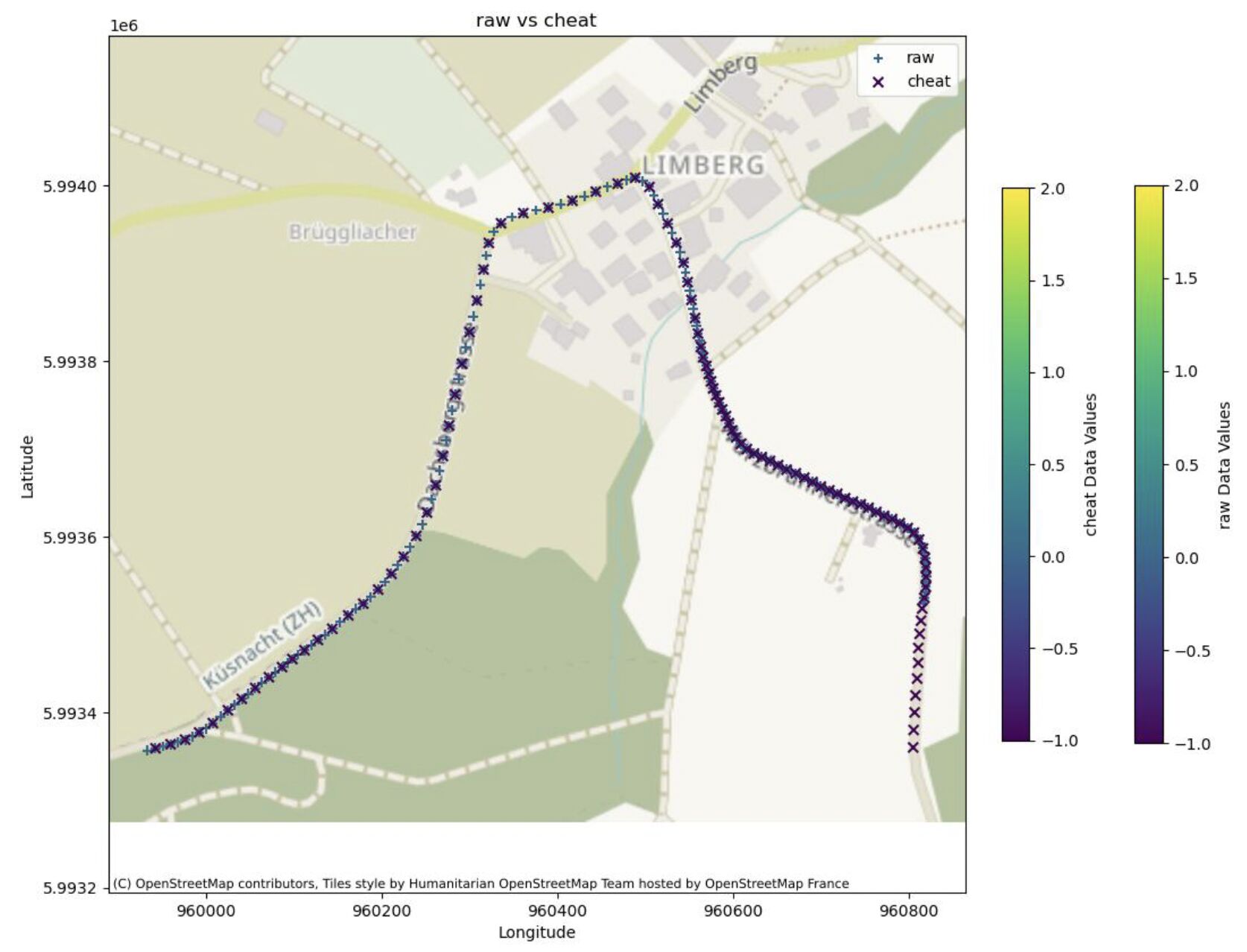
To safeguard fairness and trust in GPS-based timing, LaceUp has launched a research project together with ETH Zurich. The goal: an algorithm that automatically detects manipulated or low-quality GPS tracks.
GPS-based tracking has opened up new possibilities for running, cycling and outdoor events in recent years. Athletes can now take part in competitions anytime, anywhere. But this digital flexibility creates a new challenge: how do you preserve fairness when results are based on GPS data?
At LaceUp, fairness and quality are at the centre. Whether at a virtual bike race, a running series in the mountains or a company competition – every participant should be able to trust that their performance appears correctly on the leaderboard. That trust is decisive – for athletes and organisers alike.
That is why we are deeply engaged with the topic of digital doping.
What does "digital doping" mean?
By "digital doping" we mean any deliberate manipulation or unfair use of technology to distort results in digital or GPS-based competitions. Just as classic doping undermines fairness in sport, digital manipulations – such as editing GPS tracks, merging several activities, or automated data adjustments – threaten the credibility of virtual events.
But the problem is not just about cheating: insufficient GPS quality can also lead to wrong results. If a watch loses its signal during a run, speed or distance often appear distorted – equally unfair to other participants.
A scientific solution
Since no transparent, effective tools existed to detect these problems, we launched a research project together with ETH Zurich. The goal is an algorithm that can automatically assess the originality and quality of GPS tracks.
The project team combines practical experience and scientific excellence:
- From LaceUp: Nico Schefer, Sebastian de Castelberg and Tobias W. contribute know-how from hundreds of events and millions of GPS recordings.
- From ETH Zurich: Benedikt Soja and Matthias Aichinger-Rosenberger lead the research, supported by students Kevin Kosch and Nikolaus Rath.
Together they are building a system that detects manipulated or unreliable GPS recordings with high confidence – without falsely flagging correct activities.
How the algorithm works
Development uses a large dataset of real, unaltered GPS tracks. Part of this data is deliberately manipulated – for example by shortening routes, inserting pauses or altering speeds.
The algorithm is trained to detect such anomalies among the unchanged tracks. Among other things, it evaluates:
- signal stability and consistency
- sudden, unrealistic changes in speed
- GPS accuracy and recording intervals
- geometric shape and changes of direction
- temporal continuity and metadata
The challenge lies in the balance: the system must reliably detect manipulation, but not punish genuine activities with minor GPS errors.
Transparent quality indicators
Unlike many AI models that operate as a "black box", our approach is built on transparency. The LaceUp–ETH system delivers not just a yes-or-no verdict, but traceable quality indicators that show why a track is rated trustworthy (or not).
These indicators help organisers and participants alike understand what makes a reliable GPS track – fostering awareness, fairness and better data quality.
Trust matters!
By combining scientific precision with hands-on sports experience, the project sets new standards for fairness in digital sport. The result is a system that automatically detects manipulated and inaccurate tracks – ensuring that leaderboards, badges and results reflect real performance.
As GPS-based events keep growing – from local challenges to large-scale competitions – trust in digital timing is central. Every participant should know: your performance counts, and everyone plays by the same rules.
What comes next
The research project runs until June 2025. In the coming months we will share further insights, including:
- which criteria are decisive for assessing GPS quality (without handing out a cheat sheet 😉)
- how the algorithm is tested across different sports and devices
- and what these innovations mean for the future of virtual competitions
Credits
Kevin Kosch Nikolaus Rath Benedikt Soja, Matthias Aichinger-Rosenberger, Nico Schefer, Sebastian de Castelberg, Tobias W.