

Anomalies in the Les Cols de Zurich performance data
Or: when a GPX track raises questions...
The les-cols-de-zurich.ch competition is currently running with over 700 participants – and unfortunately we had to remove one rider from the leaderboard.
Was it digital doping? Not in the classic sense – but our analysis shows clear indications that this was very likely an e-bike ride submitted as a regular activity.
What caught our attention
We have run this stage in previous editions and hold a solid reference dataset – including a recording from a former professional whose performance and GPS data are impeccable.
Suddenly a previously unknown rider appears and rockets to the top of the all-time leaderboard with an outstanding time. Reason enough for our algorithms to take a closer look.
What we found
- No direct traces of data manipulation, but several striking anomalies.
- Particularly telling: enormous time gains on steep segments, followed by performance drops on flatter sections where the rider could not exceed the 25 km/h mark – a clear indication of an e-bike's assistance limit.
- Further technical clues: unnaturally constant speed blocks, very high accelerations, and patterns typical of devices with GPS interpolation or motor assistance.
This is not classic "digital doping" in the sense of deliberate data forgery – but apparently a false declaration of the equipment used, which distorts the results and makes the competition unfair.
Why this matters
The case shows how important transparent data analysis and clear rules are for GPS-based competitions. We cannot offer absolute certainty – but the evidence strongly suggests the ride was completed on an e-bike.
After we contacted the rider, the activity was deleted. That is regrettable, but also a sign of how sensitive the topic of integrity in digital sport is.
Visual evidence
- Speed vs. gradient: steep climbs barely reduce the speed – atypical for human performance.
- Constant speed patterns: across long stretches the speed stays almost exactly at 25 km/h, typical of e-bike assistance limits.
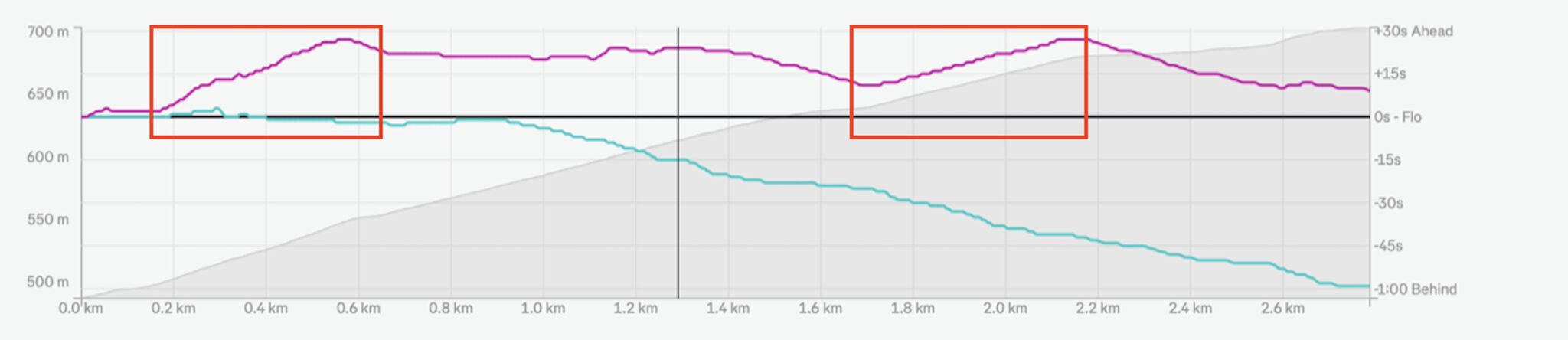
- Strava comparison: time gains of up to 30 seconds on a steep 600 m section compared to the second-fastest rider.
- GPX chart: shows speed and position along the route with striking patterns.
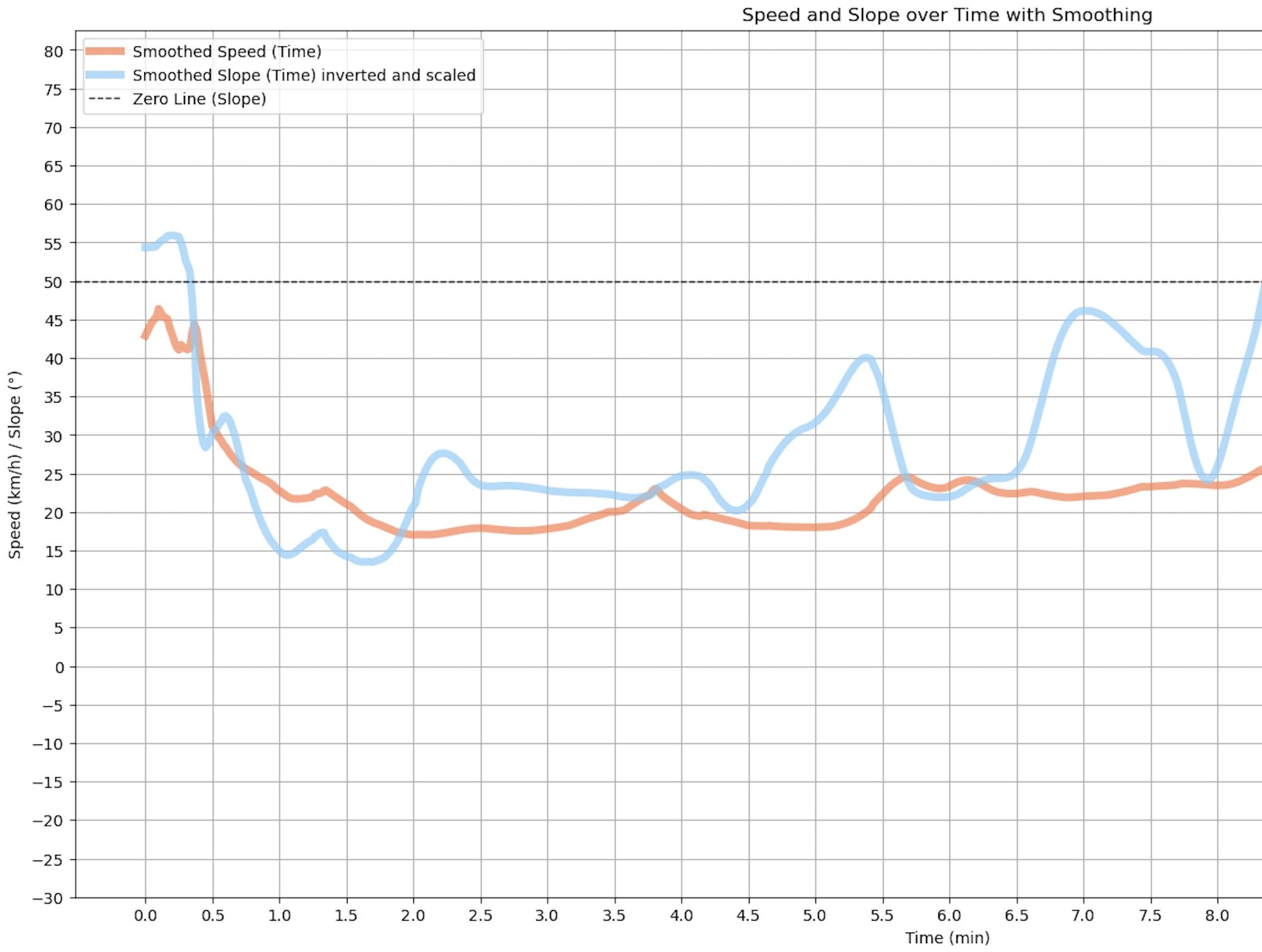
Smoothed speed compared to gradient shows that steep climbs barely slow the rider down – unusual for human effort.
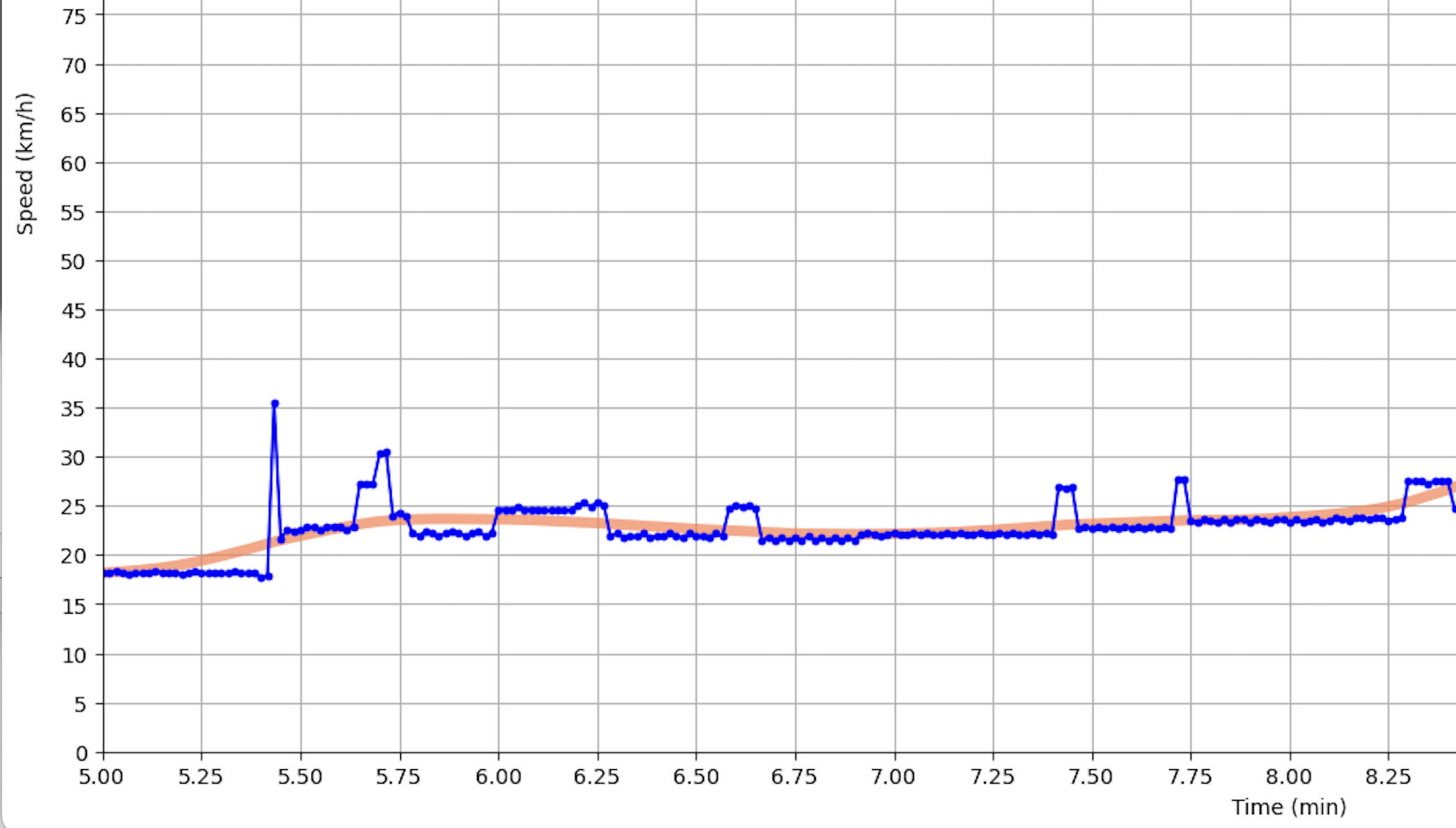
Clear patterns of near-constant speed – often around 25 km/h, matching the typical assistance limits of e-bikes
The Strava comparison shows time gains of up to 30 seconds on a steep 600-metre climb between the fastest rider (purple line) and the second-fastest (black baseline).
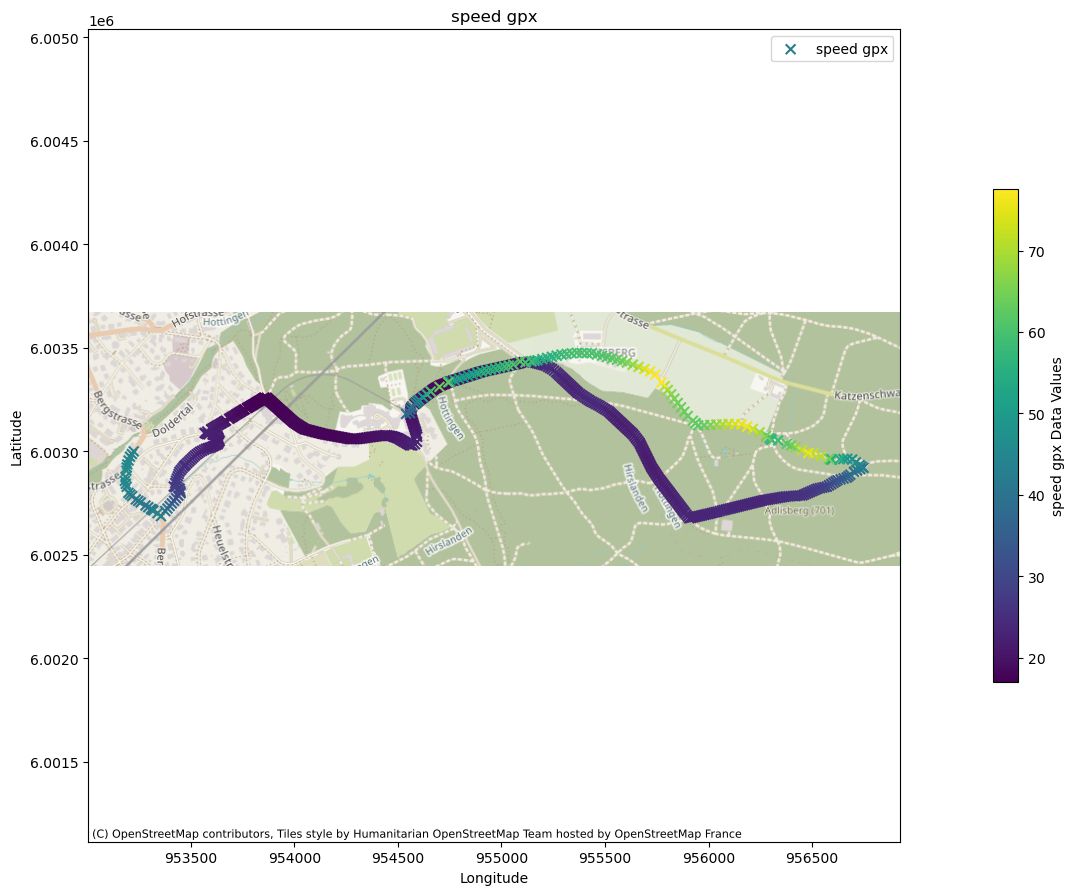
GPX track with position and speed profile
Conclusion
Fairness is the foundation of every competition – on the road or digitally.
This incident underlines why rigorous data analysis, transparency and honest equipment reporting matter so much.
We will keep doing everything we can to ensure the leaderboards of LaceUp and Les Cols de Zurich reflect the performance that is truly in the legs – not in the battery.
Credits
Kevin Kosch Nikolaus Rath Benedikt Soja, Matthias Aichinger-Rosenberger, Nico Schefer, Sebastian de Castelberg, Tobias W.